In one of the most heinous acts of police violence against Black Americans, Philadelphia cops killed 11 people (including 5 kids) and left hundreds more homeless. But the case is mostly forgotten now. We get the inside scoop on the 1985 MOVE bombing - and why it’s relevant today with our bloated and growing police state.
SHOW NOTES
Guest: Linn Washington Jr.
Linn Washington Jr. is an award-winning investigative journalist and professor at Temple University. His reporting focuses on the news media, social justice, race, and law. He also served as Special Assistant to the Chief Justice of the Pennsylvania Supreme Court.
Linn is the leading authority on the Philadelphia Police Department’s bombing of the MOVE house on May 13, 1985. He was on the scene covering the tragedy.
MORE ABOUT MOVE:
- “MOVE: Untangling The Tragedy” (Linn’s great podcast series)
- The 1985 MOVE Massacre: When Cops Bombed Philadelphia (documentary)
- On A Move: Philadelphia's Notorious Bombing And A Native Son's Lifelong Battle For Justice (book by Mike Africa Jr.)
TEACHING RESOURCES:
- "On A Move" High School Curriculum
- Zinn Education Project - Philadelphia Police Bomb MOVE
- Middle School Students Memorialized The MOVE Bombing
EPISODE HIGHLIGHTS:
[4:29] Origins of MOVE and overview of May 13, 1985 bombing
[7:20] Brutal history of Philadelphia police and pushback from MOVE
[10:46] 1978 starvation blockade of MOVE compound resulted in shootout and nine MOVE members sentenced to prison for 30 to 100 years
[13:10] MOVE’s strategy to free incarcerated members
[17:37] Police Commissioner’s plan to bomb compound and let fire burn
[27:05] Middle school students’ discovery of bombing inspires marker commemorating deaths of children
[31:32] Importance of a free press to inform the public and serve as watchdog on government
[00:00:01] Channel 10, Philadelphia It started as an attempt to evict the radical group move from their West Philadelphia home. It's turned into what Mayor Wilson Good calls the worst possible case scenario. The confrontation began with gunfire just before 6 o'clock this morning. Hours later, the end began to unfold with the dropping of a bomb from a state police helicopter.
[00:00:29] And Monday, May 13th, 1985 became a day and a night Philadelphia will never forget. Whole world for the Tatum. Whole world for the Tatum. See a dog from the spaceship. Came far from the plantation with a long way to go. Whole lot to build or just more to destroy.
[00:00:57] No hands on the wheel. Whole world for the Tatum. Whole world for the Tatum. Whole world for the Tatum. I'm Tony Tolbert. And I'm Adam Radinsky. Welcome back to Pay the Tab. Two lawyers making the case for reparations to black Americans. So today we're going to spotlight the story of the MOVE bombing in Philadelphia back in 1985. So, do you remember when that happened?
[00:01:27] Vaguely, right? So we were in law school at the time. Right. And I remember sort of bits and pieces about this kind of weird, like off the beaten path group. Mm hmm. And Philly police doing some like real shady stuff, but but not not a lot of details. Yeah. How about you? Yeah. Pretty much the same thing. Yeah. I remember that there was a that there was a huge police attack on a black group. Yeah. And yeah, definitely picked up from the media. This was sort of a fringe group kind of weirdos or something. Right.
[00:01:57] It never really made a whole lot of sense at the time. I didn't dig deep into the story. Same. Same here. Don't really remember it. So anyway, what what happened was on May 13th, 1985, the Philadelphia police actually dropped a military grade bomb on a black neighborhood causing massive death and destruction. And it's really one of the most outrageous examples of police brutality in America, which is saying something right. Yeah, really?
[00:02:26] It's really just a astonishing story. And today we have the perfect guest to help us uncover this crazy story. His name is Lynn Washington. He's an award winning Philadelphia based journalist. He's had a 50 year career as a journalist. He's now a professor at Temple University, and he's really the top expert on move and its history and also on the brutality of the Philadelphia police. Yeah.
[00:02:52] Lynn was there reporting on the ground on May 13th, 1985, literally in the line of fire. Literally. So we hope you enjoy our conversation with Lynn Washington. So Lynn Washington, welcome to pay the tab. Thank you for having me. Tony and I have been looking into the history of a group called move and the tragic events of May 1985.
[00:03:19] And we both remember, but we really never knew much about it, about the group or what happened. And notably, we really have heard nothing about it in the last 40 years. So our research into the topic led us straight to you. And you are clearly the authority on move and its history, not to mention the Philadelphia police department and some other things we'll get into. And it sounds like you've been covering move for over 50 years. Is that right?
[00:03:47] Yeah, I've been covering move since I first became a reporter in the fall of 1975. So that puts it at 50 years. And I often wonder about how could I cover something for 50 years and I'm only 42. Exactly. Yeah. So you've had an incredible career as an award-winning journalist, a true muckraker and, you know, a career of speaking truth to power and now teaching others how to do that as a journalism
[00:04:16] professor at Temple University. And we're just really thrilled to have you on the show. So let's jump right in. Okay. For those listeners who may not know anything about the organization called move, maybe you can just give a brief background like who they are, who they were, you know, their origins and kind of what they were all about. Move is a quintessentially Philadelphia story because this organization was born in Philadelphia and has pretty much been in the Philadelphia area.
[00:04:45] In terms of their orientation, they call themselves counterculture back to nature. Mm hmm. They believe that all life forms exist on the same plane. They believe in what they call natural law. But when you kind of like dig down a little bit or peel the onion a little bit, what they're saying is they reject all of the laws that are manmade laws. Mm hmm.
[00:05:13] But then what does natural law mean? Well, seemingly it means anything that move says it means. Okay. They first came on the scene in the early 1970s in Philadelphia. They had a series of clashes with Philadelphia police that built up to the event that you've been focusing on the horrific bombing and burning on May 13th, 1985. Mm hmm.
[00:05:42] And when I say bombing and burning, in an effort to get move members out of a row house in a section of West Philadelphia, the Philadelphia police ultimately dropped a bomb on top of the house. Mm hmm. The bomb started a fire in the fire and the police commissioner issued an unconscionable order not to fight the fire. He said he wanted to use the fire as a tactical weapon to drive the move members out of the house.
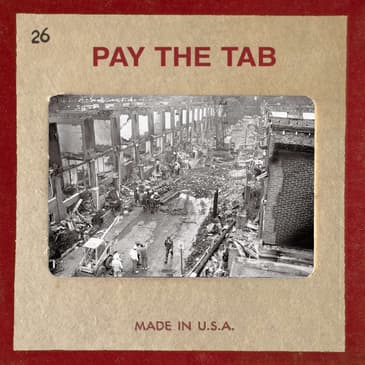
[00:06:10] And that resulted in the deaths of 11 people inside that house, five adults, six adults, five children. And then it also burned down 61 homes because the fire wasn't, no effort was made to extinguish the fire for about an hour or more. And by that point, what was a blaze that was easily controllable became an uncontrollable inferno. Right.
[00:06:38] And just an unbelievable event. And we'll go into it in some more detail in a bit. Um, but if we could just move back a little bit, what we understand, like you're saying, the move had these philosophies that were sort of, you know, anti, um, anti industrialization and technology and all of that. And, and, you know, respecting the rights of all creatures and so forth. Um, but it does seem like a sort of a through line and what's what drove them especially and
[00:07:06] what sort of ignited a lot of these, um, these incidents was them responding to the unbelievable brutality of the Philadelphia police department. Is that right? Uh, yes, it's right. Um, although, uh, like in lawyer terms, there was some contributory negligence on the part of move. Okay. Fair. Um, parallel to what was going on with move in the Philadelphia police during the 1970s, police in Philadelphia were exceptionally brutal. Hmm.
[00:07:36] And I don't want to divorce what happened in the 1970s from what happened in the sixties and fifties and forties. Philadelphia has had a very ugly, uh, history in terms of police and their use of excessive force. What gave it a distinction in the 1970s is that there was a mayor of the city named Frank Rizzo. He was a former police commissioner and he just sanctioned everything. My police right or wrong, you know, um, there must be some reason why you had to exert force.
[00:08:03] And that's what we do move would counter that force. So where other people would just essentially get beat up, move fought back. Mm hmm. And that led to things just, um, uh, increasing a move would have their, uh, demonstrations. Uh, the police would try to, um, you know, you're being disruptive. You have to break it up and there, no, we're not going to break it up. And then, uh, a fight would ensue. Right.
[00:08:31] Uh, and during the initial stages of the fight move would get the best of police officers. I mean, really beat them down to the ground and, um, ultimately overwhelming force. I mean, if you have 12 move members and you have 50 police officers, even if, even if all move members were Bruce Lee, they're eventually going to get overwhelmed. Not a fair fight. Um, just, uh, I think a salient indicator of the level of abuse of policing in Philadelphia.
[00:09:00] During that decade of the seventies police in Philadelphia shot and killed more persons, uh, inclusive of unarmed people engaged in no criminal conduct at all. But the bottom line here is they shot and killed more people than police in New York city. And the population in New York city at the time was five to seven times larger than Philadelphia. Wow. And as we know, the, um, New York police also have their own legacy of abusive, uh, misconduct.
[00:09:29] So Len, you've, uh, if you could walk us through some, uh, key moments, um, prior to the explosive events of May 13th, 1985. Uh, we understand that in March of 76, there was a pivotal incident where a baby was actually killed. Right. Yes. Could you, could you, you know, take us through what all went down with that? Right. Yeah.
[00:09:50] That incident really, uh, was the spark that led to ultimately May 13th, uh, 1985 in that particular incident. Um, there was a clash between move members and police. And during that clash, a move baby was, was killed.
[00:10:11] Um, I guess the correct description would be a move child died because police disavowed any responsibility for it. And depending on your story, uh, the police, uh, police officer during this clash, knocked the baby from the mother's arms and the mother had the baby and the swing and was swinging on police. Uh, or the, uh, police pushed the woman to the ground and she fell on top of the baby.
[00:10:41] But the bottom line is the baby died from that point move got more and more radical. And that led to an incident, um, uh, a little more than a year later in May of 1977. Now that's, that's when move was brandishing rifles and talking back to the police. Yeah. Yes. Yes. They came out and they're, they were saying, you know, if you want us come in and get us, we got something for you. Right. We're not going to come off.
[00:11:07] And that incident led to a starvation blockade in early, um, August. So, I mean, an early, um, of 1978. And when I say a starvation blockade, mayor Rizzo, in an attempt to get the move members out of their compound in a community called Powelton Village, actually sealed off that whole neighborhood and would not let food, water, anything go into the move compound.
[00:11:36] And that lasted almost two months. There was an agreement. The agreement was that move was supposed to vacate by August 1st, 1978. They didn't, the police came in, there was a shootout. A police officer was fatally wounded. Uh, all available evidence seems to indicate that the, um, officer died by friendly fire. However, that led to the convictions of nine move members, four men, five women. Mm-hmm.
[00:12:06] The police said that the only ones armed were the men. So under any notion of fairness and, you know, the amount of time should be commensurate with the crime. Why are the women caught up in all that? Right. Yeah. Well, the judge said that the move members came into his courtroom as a family and he would sentence them as a family. Wow. So making up new laws. Wow. Yeah. Yeah.
[00:12:31] We just see these corruptions of, uh, fairness and legal precedent and, and, and just proper, uh, procedure. So after that catastrophe, uh, uh, moves their focus shift a little bit. Right. Um, and they focus on freeing the move nine that were, that were incarcerated. Uh, they relocated to a new neighborhood in a different section of Philadelphia. Right. Right. Uh, a black, uh, middle-class neighborhood.
[00:12:59] Uh, and their plan as we understand it was to gross out the neighbors. It seemed like with a bunch of stray animals and rats and roaches and bugs and garbage and all kinds of other growth, gross stuff. Uh, apparently they had, you know, announcements blaring on loudspeakers, you know, day and night. Right. Moose strategy to secure the release of their incarcerated members was that if, was to put pressure on their neighbors, i.e. gross the neighbors out. Right.
[00:13:28] And neighbors would get so frustrated that they would go to city officials and demand action. Mm-hmm. City officials would just go to the prison and let them out. As the fire grew tonight, so did the anger of many West Philadelphians. They wondered why Moore was not done quicker to put out the fire. I really think they should have more engines out here, a lot more water and whatever to put that fire out because they're just letting a lot of time go by.
[00:13:58] Maybe you could just briefly set the stage for us on May 13th, 1985. What was the situation at that time before everything went down that day? Well, um, moves, um, campaign, uh, to secure the release of their members, which was, you know, put pressure on the neighbors, um, was ramping up.
[00:14:19] So the neighbors turned to the governor of the state of Pennsylvania, who was a Republican, Richard Thornburg. And then it became a political thing. Uh, uh, uh, is the Democratic city going to allow the Republican governor to come in and clean things up? So that's when the city decided that they were going to act. Mm-hmm.
[00:14:44] So they had to get a predicate, you know, a legal predicate to, to be able to, um, justify their assault on the house. So that's where they came up with these arrest warrants, um, arrest warrants for, um, disorderly conduct, arrest warrants for, um, failure to adhere to, um, restrictions in terms of parole and probation.
[00:15:10] Uh, these were like minor things. They, they, they, they weren't for assault. They weren't felonies. And that's what was used to, um, to justify the police coming out. And it, and it, and just, just so many ironies and just craziness. When they came out on May 13th, uh, to do the raid, the police commissioner at 5.30 in the morning goes on his bullhorn and said, move. This is America, right? Not this is the police, Philadelphia police. Move.
[00:15:40] This is America. You must obey the laws, surrender, you know, and we'll give you 15 minutes. Well, after that was said within a minute, move had a response. Quite profane. You know, we ain't coming out. Um, and if you come in, you know, Got something for your ass. We got something for you. The morning. Ray led to a shoot out.
[00:16:07] It wasn't a shoot out as much as it was a shoot in the police department fired 10,000 bullets into the move. And it was a shoot out of the move house in a 90 minute span. Wow. And it ranged from handguns, 38 caliber revolvers, 9 millimeter pistols. Um, the AR 15s, uh, 30 caliber rifles. They had a 30 caliber machine gun and they had a 50 caliber machine gun that they use.
[00:16:37] They brought an anti tank gun with them, but they didn't use that. There was, uh, and there were some other things that happened on that morning, uh, when the police actually used, um, high explosives, uh, that blew off the front of the, uh, house. You know, you could hear the shooting. I mean, it sounded like something that you heard on TV. Is this Babe Ruth? You know, is this Columbia or somewhere? Uh, and then all of a sudden I started hearing things bouncing off the sidewalk.
[00:17:07] So I said, Oh, it must be here. And I look up in the sky. It's a clear blue sky. And it's like, Oh shit. It's bullets. Right. So fortunately I had ridden over there on my motorcycle and I was near my motorcycle. I grabbed my helmet, put it on. And I scrunched under a car to try to not get hit by a falling bullet. Mm-hmm. Well, maybe you can, you can take us to a point that day and you're still out on the scene covering this, right? Like you were on the scene all day.
[00:17:35] So at some point that day, it sounds like things took a very dramatic turn and a whole new, a whole new, uh, assault developed by the, by the police. Maybe you can tell us what happened. Right. Yeah. So at one point, my, um, bosses asked me to go cover the city's, uh, impromptu headquarters, their command posts. So while I'm on my way there, I run into a reporter who I knew, but I didn't interact with all the time.
[00:18:02] He starts talking and I knew this guy had really good sources with the police. And he said, you know, they're going to drop a bomb on me. And I said, what? No, I knew that the police were capable of doing some ugly things, but dropping a bomb on a house with children in it was just beyond my imagination. So at this point I'm tired. This was probably maybe like 3, 34 o'clock, 430 in the afternoon.
[00:18:29] I had gotten there at 430 in the morning. Wow. It's been a long day. It's been a long day. So I went across the street, sat on a curb and was going through my notes, just trying to, you know, chill out for a minute. And in front of me is a Pennsylvania state police helicopter. Didn't pay no attention, you know, and then I look up and there's three guys walking out. All of them have on nine millimeter pistols. One's carrying a 45 caliber submachine gun.
[00:18:58] And another one is carrying a green satchel. And it was like, oh, shucks. That's the bomb. So the pilot, you know, was very polite. Sir, would you move? And I'm thinking to myself, oh, of course you've got the guns. I'm out of here. So I get up, leave the helicopter takes off. I see it circle because now I'm on ground level. Okay. I see it circle.
[00:19:20] And then all of a sudden the neighborhood shook like it was an earthquake and you could see black smoke coming from the top of a house. And I presumed it was a move house. What was strange in this utterly surreal day when the firefighters came, they were moving so slow. I mean, the proverbial, they were moving as slow as molasses. Right. So people were saying, fight the fire, fight the fire.
[00:19:47] And the firefighters were, you know, like shrugging their shoulders like, you know, and people say, what do you mean? Fight the damn fire. And then it got more profane from there. Well, none of us knew, including the firefighters was that the police commissioner had told the fire commissioner not to fight the fire. Let it burn. And it let it burn.
[00:20:08] So at that point, you can literally see the flames jumping across the roof lines on the north side of the 6200 block of Osage Avenue, where the move members house was. And then you could see the flames jumping across to the south side of the street, catching those houses on fire. And by the time the sun went down, it was like the sun never went down because the fire was so intense.
[00:20:35] It had this just strange orange glow. And like I said, you know, just got more and more crazy from there. So just to be clear, this is a house with children in it that everyone knows are in it. And police commissioner makes a tactical decision to let the fire burn, which at this point is spreading to the neighborhood, right? Yes. Yeah. It's burning up.
[00:20:59] The it is now consuming the entirety of the 6200 block of of Osage Avenue is taken out or is now consuming a number of houses in the 6200 block of Pine Street, which would be to the north. And a few houses on Addison Street, which was the street immediately to the south. So this just an inferno. I mean, it was an absolute inferno.
[00:21:27] We understand from some of the subsequent testimony and stuff that it's on record that the police commissioner not only decided to use the fire as a tactical weapon, but he also used the phrase, let's get those motherfuckers. Right. Right. In referring to why he let the fire burn. Well, that particular comment to get those motherfuckers.
[00:21:51] He at that point, according to testimony, was talking to the person who was constructing the bomb. And, you know, the police bomb squad is trained to disarm bombs, not to build bombs. Right. So they built this bomb with a substance that's usually used for mining and tunneling called Tovax. And then they had military grade C4.
[00:22:17] So when they're constructing this bomb, the police commissioner told the. The bomb squad member who was building the bomb to put shrapnel in the bomb. So that's to get those motherfuckers. Just to kind of recap what happened that day. So 11 people were killed, all occupants of the move house, five of them children, six adults. 61 homes were destroyed in the neighborhood.
[00:22:46] And I think you've reported that over 250 people were rendered homeless immediately. Right. Right. And so that sort of was the outcome of this action to drop a bomb and let it burn. Right. And let it burn. Right. The only thing that was left of the houses were the cinder block walls that were, you know, between the houses. So these people lost everything, all their clothes, all their furnitures, all their mementos, all their jewelry.
[00:23:13] There was one gentleman, an elderly gentleman who had collected jazz records, you know, vinyl LPs for 30 years. Needless to say, a fire where the temperatures, according to subsequent research, reached over 2000 degrees. Metal melts at 1800 degrees, over 2000 degrees.
[00:23:40] Tears streaming down the face of Janice Walker, whose home on Osage, two doors from the move house was destroyed. I want to know who's going to replace it now. All of their dreams, all of their aspirations are tied up in that house. There was a massive investigation, but it was by a, um, a citizens commission that was established by the mayor. Mm-hmm.
[00:24:12] The then current district attorney at the time was a guy named Ed Rendell. As district attorney, he refused to convene a grand jury. Mm-hmm. And some community groups in Philadelphia actually took him to court to get a court order to make him do a grand jury investigation. And the judge threw out their lawsuit. Wow. Wow.
[00:24:36] So, two years after the move commission issued their report that included a finding that the deaths of the children in 1985 appeared to be unjustified homicides,
[00:24:51] the new DA, a Republican, the guy named Ron Castile, who subsequently went on to Pennsylvania Supreme Court, came out with a report that this was a monumental, epic incompetence and this, that, and the other. However, there's no charges that warrant criminal because no one had intent to do anything wrong. Mm-hmm. Mm-hmm. Mm-hmm. Mm-hmm.
[00:25:18] And just from a legal point of view, there were two crimes that could have been charged where the, where the predicate was not intent, but result, what happened? Reckless endangerment. Right. And risking a catastrophe. Neither one required, required the, the requisite mens rea or guilty mind. Absolutely. Yeah. Yeah. You could have wanted to do the best thing possible, but if your result was reckless and your result caused a catastrophe.
[00:25:48] There's liability. Yeah. How is that not a complete slam dunk case, do you think? No negligence charges at the, at the state level. No, no civil rights violations at the federal level. The police commissioner, the fire commissioner, the person who built the bomb, the officers who were shooting in the alleyway. None of them were ever charged, but it was just no justice, nothing.
[00:26:14] And that's the part of the problem that we see throughout American history. Well, and I was going to speak to that. Well, and that's what I was going to speak to that. The, you know, the government investigating itself is, is rarely going to get to the truth. Right. Right. Yeah. So quickly switching gears to something that's a little more, um, uplifting, if you will. Um, we understand that in 2018, a group of middle school students, uh, became aware of the case. Yes. Right. And what all went down.
[00:26:43] Um, and they also learned that some, some kids like them were, were killed, you know, that they weren't familiar with that. Uh, which it sounds as if that, that led to putting some pressure on, on Philly to actually do, do something. Right. Right. That, that, that, very true. Um, the incident happened. Nineteen eighty five. There was a move commission. They issued their report. Grand jury issued their report.
[00:27:08] And then it really kind of disappeared from the collective memory in Philadelphia. In 2017, 2018, um, the teacher at a middle school in West Philadelphia assigned her students to look at the issue of police brutality in West Philadelphia, the neighborhood that they grew up in. Mm-hmm. And the kids discovered move. Right. They had never heard about this.
[00:27:36] They grew up in West Philadelphia and never heard about this. Right. But the thing that, that outraged him the most was when they discovered that five children were murdered in that incident and nobody was saying anything about it. Mm-hmm.
[00:27:49] So these young kids, I mean, we're talking about 12, 13 year olds of their own volition decided to initiate a campaign to get a state historic marker installed commemorating the events of May 13th, 1985. And recognizing the deaths of the five children. Mm-hmm. Yeah.
[00:28:12] And then a few years after that, the newly elected, um, city council person for West Philadelphia, uh, initiated a procedure to get the city to formally apologize. Right. In the two thousands in the 21st century. The events of 1985 were not known and, and, or forgotten even in Philadelphia. Yes. And certainly for the rest of the country, you know, that these events are lost now.
[00:28:42] Most people, certainly most young people have never even heard of it. Mm-hmm. And why is this huge tragedy not taught in U.S. history classes? Really? Yeah. Yeah. When we look at the history books, um, we see so little about, uh, things that happen. How much coverage in any history book, college, high school, junior high school has a chapter on lynching. Hmm. You just don't see it. Right. It happened.
[00:29:11] It was an embarrassment around the world for America. Hmm. But we just don't know our history. You know, the, the bottom line is there's so much of our history that just, um, gets excluded and it gets excluded conscientiously. Absolutely. And that's just not in high school or, or, or college level. Mm-hmm. Look at law schools. When I had a fellowship at Yale, doing our constitutional law class, the civil rights cases were one day.
[00:29:41] Mm-hmm. We deal with education, you know, the desegregation of the schools, employment, and one other area. So there are people who can graduate from places like Yale without understanding the role of systemic and institutional racism in our legal system. What, what do you think, uh, real reparations would, would look like for, for what happened in 1985? What would reparations look like?
[00:30:08] Uh, we need to, at the very least, make sure that every single American is able to enjoy every single right that our constitution guarantees. And that means holding some people accountable. Mm-hmm. Um, you know, the, at one point the justice department was coming in doing these pattern and practice monitoring of police forces. And they would come in and, you know, you should do this, you should do that, you should do that.
[00:30:35] Well, in doing this, that, and the other, the police officers who were violating the law should be held accountable to them. Mm-hmm. Um, seems like a minimum thing, right? Yeah. So we need some equitable law enforcement. Yeah. Now, would it be nice to get a check? Yeah. But, you know, I ain't holding my breath on it. I got it. I got it. And at 75, I know I ain't holding my breath on it. Fair enough. Fair enough. Yeah.
[00:31:01] But if we just, you know, as Martin Luther King often said, just be true to what you say on paper. Mm-hmm. Mm-hmm. Mm-hmm. Well, and truth telling is certainly one aspect of reparations. And we know that's a part of your line of work as well. Yes. You know, and you, you know, teach journalism, expose untold stories. Mm-hmm. Mm-hmm. What encouragement might you have for someone who, you know, interested in, you know, stepping into that role?
[00:31:30] What advice might you give a young person who's thinking about that? I would just say, understand what journalism is in the constitutional scheme of America. We all know about this freedom of the press. Mm-hmm. Why was that inserted into the Constitution? Two very basic things fundamental to democracy. One, to inform and provide information to the people.
[00:31:57] And the other is to serve as a watchdog on government. Mm-hmm. So if we just do our constitutional duty, we are helping invigorate and protect and preserve democracy. And then I would also endorse adherence to the ethical codes that journalists say that they're supposed to be about. Mm-hmm. One, a society of professional journalists. It starts off. Accuracy. Mm-hmm. Make sure everything that you do is accurate.
[00:32:29] Boldly tell the story of the diversity of the human experience. Mm-hmm. So you would not have racially excluded coverage. Mm-hmm. Respect opinions, even opinions who you disagree with. Mm-hmm. So if we just follow what we claim we're following, journalism would improve substantively. Wow. Wow. I think that's so critical what you're saying.
[00:32:56] And I think the role of journalism has gotten a little bit warped in a lot of ways. It feels like in the last 40 years where more and more it's become not a watchdog on government, but almost like a handmaiden to doing the- Absolutely. Especially high levels of government. Seriously. Seriously. So really like to hear what you're saying. Yeah, yeah, yeah. Yeah, yeah, yeah. You've said that MOVE is with you every day of your life. Mm-hmm. Right? That a day hasn't gone by since 1985 that you haven't thought about it.
[00:33:25] You said that every time you're in that area or on the block, it feels like you're, quote, walking through the valley of the shadow of death. Mm-hmm. But it also sounds like when people ask you what was MOVE that it's hard to kind of pare it down, right, in a soundbite, right? So what was MOVE, part A and part B? Any final thoughts you'd like to share on what happened then and the legacy now?
[00:33:52] I'm still trying to figure out MOVE. I know what they say that they are. Mm-hmm. And it's kind of a quandary because MOVE wasn't totally bad, but they did some bad things. Mm-hmm. Regardless of what they were and what they did, there was no justification for what happened on May 13th, 1985. Mm-hmm.
[00:34:20] And I would just urge people to just reflect on these events and try to do all that you can to make sure that these sort of things don't happen again. Your podcast about MOVE is fantastic, riveting. Thank you. So we urge, no, thank you. We urge listeners to check it out. It's comprehensive. It's, yeah, really just fantastic.
[00:34:49] It's called MOVE, Untangling the Tragedy, and we'll include that in our show notes. Okay, great. Thank you. Thank you. Yeah, Lynn, we really appreciate your time and sharing your wisdom and your memories. This has been amazing. We appreciate you. Okay, thanks, gentlemen. Take care. Have a great day, man. Nice meeting you. Peace to you. Hey, do you hook somebody with a bomb?
[00:35:18] You know, like first of all, I mean, I'm still a little mixed up. I'm puzzled. You know, I'm hurt inside. Wow. That's some crazy shit. Yeah, truly mind boggling. I mean, where do you begin? Like this really happened? Right. This is a group of residents of a city, and there's a few outstanding misdemeanor warrants that the police are- Not threatening anybody, not committing acts of violence. Yeah, it's hard to really put this into perspective, isn't it? Like just to process this.
[00:35:48] Well, and to be able to do it so blatantly without fear of any repercussion, right? Any consequences? Like, yeah, this is what we're doing. Yeah. So, you know, Lynn writes and talks about how there was a double standard that the police operated under. Right. Imagine if this had been a white group in a white neighborhood. Right. Would it have been the same response or similar response? I mean, you can't imagine. It's not even like, it's not on, you just can't even picture that. It's not remotely possible.
[00:36:16] Yeah. I know. When you try to think of like parallel examples, like one thing that comes to mind is January 6th, right? These people storming the Capitol armed. Yes. Like threatening to kill Congress members. Come on. Imagine if that were a group of black folks. I mean- Please. You know, another thing that this story really brings to mind is the history of black militant groups and black militant leaders in America. Yes. Where these groups and these leaders are targeted, infiltrated, you know, if possible co-opted. Yes.
[00:36:46] By the government and if necessary destroyed. And it's, it's not even hidden. Right. You know, it's almost like, like out in the open, like, yeah, this is what we're doing. So, so Adam, let's, can we take, take a step back? Okay. Uh, and this is, this is tricky, right? Because certainly don't want to fall into that, um, trope of like blaming the victims. Okay. Right.
[00:37:11] But, uh, it's true that the move folks, you know, um, they weren't just odd, but they were engaged in some, if not criminal, some, some, some harmful behavior. Sure. Right. With like health and safety. Health and safety. With garbage overflowing. Okay. So how do we place that in context? If there was some bad behavior, if there were neighbors were up in arms, or these were other black folk too. Right. All black neighbors. Right.
[00:37:38] Um, you know, I say that not to, not to justify the police actions by any stretch, but to contextualize it to a certain extent. One thought that occurs to me is that, you know, which we always lose sight of with the police brutality in America today is like, what's their job? Like police's job is to serve and protect. Right. Their job is to defuse difficult situations, to deal with bad neighbors.
[00:38:02] And bottom line, as you mentioned, is that whatever the move folks were doing didn't arise to the level of them being bombed. Right. Right. Or shot at. Shot at. Like, why? I mean, the response was so disproportionate to whatever they were being accused of. It's almost as if the, you know, Philly police department and the chief of police were like, you know, damn all this. Like we're, we're fed up with these Negroes. Like, you know, we're going to show them like how this is about exactly.
[00:38:30] Well, and you know, the, the words from the police commissioner's mouth, right? When they planned the bombing, very premeditated in advance. Yes. Put some shrapnel in there and let's get those motherfuckers. Right. The guy actually said. Pretty clear. I'm sorry. No repercussions. Doesn't get any clearer than that. That's crazy. So as Lynn explained to us, this whole thing was, was bogus. Right. The government led investigations, which rarely work out the way they're supposed to. Right.
[00:38:59] Them, you know, investigating themselves. Yeah, exactly. Rigged court cases, zero reckoning. No punishment, no consequences of any kind. Right. Right. Not one single person got into any kind of trouble for this. Even got suspended or put on leave or anything. Let alone prison for the outright murder of innocent folks. It's time to pay, pay the tab. Let's look at, right? Repair.
[00:39:28] What would some actual justice look like here? You know, the fact that none of us or very few of us knew about this. Right. Is a crime in and of itself, right? Yeah. This should be known like throughout, certainly throughout all of, you know, Philadelphia. Right. I mean, it should be made mandatory part of the Philadelphia school curriculum. For starters. Yes. For starters. But even beyond. Right. This is, you know, a national event that should be known, you know, throughout the country. Right. If we're talking about real reparations, people should know about this. Definitely.
[00:39:54] I know one of the surviving family members, this guy, Mike Africa Jr., right? Right. He's been speaking quite a bit about sort of carrying the torch of Moves' beliefs and, you know, some kind of reparations for what happened in 1985, right? Yeah. So Mike Africa Jr., he, you know, was born in prison. He actually waged, you know, campaign to free his parents, which finally happened in 2018. Yeah. Amazing story. He still carries a torch today.
[00:40:22] He actually, you know, lost a childhood friend who was eight years old in the bombing. Right. Right. So you got to imagine the trauma that he's been carrying. You know, I'd like to read a quote that Mike Africa Jr. said. He said, I want them to pay. I want them to pay till it hurts. Not just in money. They need to be forced to remember. They need to be forced to set up programs.
[00:40:50] They need to be forced to not only apologize for what they did, but to set up resources for people to be able to recover and heal from that for the rest of their lives and for the generations to come. Well, that's powerful. Seems pretty spot on. Hard to argue with that. So, yeah. While we're on the subject of reparations, you know, this case seems like a good example of we always try to come back to the society level of these atrocities and how, you know, we might look at one example.
[00:41:19] But, you know, we're looking when it comes to police brutality. It's crazy. This was back in 1985. This is before all the insane military gear and tactics and budgets. The bloated police budgets that are in pretty much every American city today. You know, it's just been snowballing since the time of the move bombing. It seems like things have gotten worse and worse. So, yeah. Today, pretty much all big city police departments feel more like armies, right? That's how they operate. They're huge budgets. Yeah.
[00:41:48] Military weapons, tactics. They treat their own citizens who pay their salaries like enemy combatants. Truly. Especially if they're black. Truly. To repair this, you know, we need a massive reset. Massive. Our whole current police state and the system we have needs to be scrapped and replaced with actual services to residents. And I know we're going to dig into this in future episodes as well. Yeah. Yeah. Folks, thanks for listening. If you like what we're doing, please tell your friends and family about the show.
[00:42:18] And give us a review on Apple Podcasts. And if you can, please contribute on our sub-staff. Help us bring more great stories to you. Our theme music is by the artists Loji and Swarby. Artwork by Jackie Rudinsky. See you guys next time. I'm tired of being broke. Let's open up shop. Unp. Or get the money, grab it all and we out.